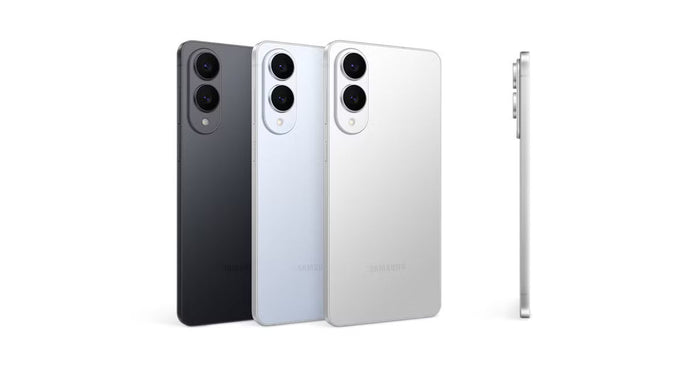
The Pixel 8a is one of the best-value phones Google has produced. It carries the same Tensor G3 chip as the Pixel 8, a bright 120Hz Actua OLED display, and a software commitment that runs to 2031.
It also has one notable weak point, and it is the reason a great many owners end up searching for Pixel 8a screen replacement within a year or two of buying.
Why Pixel 8a Screens Break More Often
Google fitted the 8a with Corning Gorilla Glass 3. That is a generation behind the Gorilla Glass Victus used on the standard Pixel 8, and several generations behind current flagship glass.
The difference is not marginal. Gorilla Glass 3 offers reasonable scratch resistance but noticeably lower impact resilience — drops that a Victus-equipped phone shrugs off will crack an 8a. It was a cost decision on Google's part, and it is the single most common complaint about the device's durability.
Two practical consequences follow. First, if you own an 8a and have not yet cracked it, a case with raised edges and a tempered glass protector is a worthwhile investment. Second, if you have cracked it, you are in extremely good company — this is by some margin the most frequently replaced component on the model.
What the Display Assembly Includes
A screen replacement on the 8a is not just glass. The assembly integrates:
- The 6.1-inch Actua OLED panel, 1080 x 2400 at an adaptive 60–120Hz
- The touch digitiser
- The optical under-display fingerprint sensor
- The earpiece and proximity components
Because these are laminated together, the complete assembly is replaced rather than the outer glass alone. Anyone offering to replace "just the glass" on this model is describing a process that does not reliably work on a bonded OLED assembly.
Symptoms That Mean Replacement
Cracks of any size. The 8a is IP67 rated — dust tight and protected against immersion to one metre. A crack breaks that seal, and cracks in Gorilla Glass 3 tend to spread readily.
Black patches, coloured lines or bleeding. These indicate OLED damage rather than surface damage, and they expand over time.
Dead zones or phantom touch. Digitiser damage, often from an impact that left minimal visible cracking.
Fingerprint unlock failing after a drop. The optical sensor sits directly beneath the panel and is commonly affected in the same impact.
Flickering or intermittent blackouts. Usually a damaged display connector or panel.
If you are seeing any of these, a proper diagnostic is the sensible starting point. Options for Google Pixel 8a repairs are worth reviewing before you make a decision about the phone.
Part Quality: What to Watch For
This is where quotes diverge, and on the 8a the difference shows up in ways owners notice daily.
The display is the phone's headline feature — 120Hz adaptive refresh, 1,400 nits for HDR content and 2,000 nits peak. Aftermarket panels routinely fail to deliver it. Common shortcomings include:
- Locked 60Hz operation. Many third-party panels cannot do adaptive refresh at all. The phone still works, but the smoothness that defines the 8a in daily use is gone.
- Substantially reduced brightness. Outdoor legibility suffers immediately, and HDR content loses its impact.
- Colour calibration that does not match Google's profiles. Noticeable side by side, and irritating once seen.
- Unreliable fingerprint performance. Optical sensors depend on light transmitted through the panel, so panel quality directly affects unlock reliability.
- Higher failure rates on touch consistency over the following months.
Genuine or OEM-equivalent parts return the phone to specification. Aftermarket panels return it to working order. On a phone whose display is its main selling point, that distinction is worth understanding before you choose on price alone.
Ask any repair centre which grade of part they are fitting. A straight answer is a reasonable expectation.
Is It Worth Repairing a Mid-Range Phone?
This is the question 8a owners actually ask, and it deserves a direct answer rather than a sales pitch.
For most owners: yes, comfortably.
The reason is the software commitment. Google guarantees seven years of OS updates, security patches and feature drops for the 8a, running through 2031. That is an unusually long horizon, and it is longer than most people keep a phone. A repaired 8a is not a device limping toward obsolescence — it is a phone with years of full support still ahead of it, running the same Tensor G3 silicon as the flagship it launched alongside.
Set against that, the maths is straightforward. A screen replacement costs a fraction of a comparable new handset, and a working phone holds meaningfully more trade-in and resale value than a cracked one. Selling a damaged 8a means accepting a heavily reduced price from a buyer who will simply have the screen replaced themselves.
Replacement only becomes the better option where damage extends across several major components, or where liquid has reached the mainboard.
What Affects the Price
- Part grade, the dominant factor
- Frame condition — the aluminium frame can deform on a hard corner impact, and a bent frame must be addressed or the new panel will not seat and seal correctly
- Additional damage, since the composite rear panel and camera bar often take a hit in the same fall
- Liquid exposure, which may point to problems beyond the display
- Warranty terms on parts and labour
Be wary of quotes far below the market rate. On this model they almost always indicate a 60Hz aftermarket panel.
A Note on Water Resistance
The 8a's IP67 rating is a factory certification, achieved with seals and adhesive applied under controlled conditions. Once the display has been lifted, the original adhesive is spent.
A competent repair applies fresh adhesive and restores a strong seal. No repair, anywhere, formally reinstates the IP rating — so a repaired phone should be treated with more caution around water than a new one. Any repair centre claiming otherwise is overselling.
Why DIY Rarely Pays Off Here
Parts are cheap enough to make a home attempt tempting. The obstacles are real:
- Display adhesive needs controlled, even heat; too much damages the panel, too little tears ribbon cables
- The fingerprint sensor and its connections are easily damaged and expensive to put right
- Restoring the IP67 seal requires correct adhesive application
- Puncturing the battery during separation is a genuine fire risk
- Cheap kits effectively never include a 120Hz-capable panel
A failed attempt converts a single-component repair into a much larger one, and often ends with a phone worth less than the parts spent on it.
Before Your Appointment
- Back up to Google One or a computer
- Note your PIN or pattern — technicians must unlock the device to test touch response and re-enrol your fingerprint
- Remove your SIM if you want to keep it with you
- Photograph the damage for your records
- Confirm the warranty covering both part and labour
Book an Assessment
A cracked Pixel 8a screen does not stay as it is. Cracks widen, the dust and water seal degrades, and touch reliability declines. With years of Google software support still ahead of the device, getting it sorted properly is almost always the better decision than replacing the phone.
You can review pricing and arrange Google Pixel 8a repairs with warranty-backed workmanship.
Frequently Asked Questions
How long does a Pixel 8a screen replacement take? Most repairs are completed within around an hour, depending on the extent of the damage and the provider's schedule.
Will my fingerprint sensor still work? Yes, with a quality panel correctly fitted. The optical sensor reads through the display, so panel quality directly affects how reliably it unlocks. You will need to re-enrol your fingerprint afterwards.
Will I still get 120Hz after the repair? Only with a panel that supports adaptive refresh. Many budget aftermarket displays are 60Hz only, and the phone will simply run at 60Hz with no way to change it. Ask before booking.
Why does the 8a crack more easily than the Pixel 8? Google used Gorilla Glass 3 rather than the Gorilla Glass Victus fitted to the Pixel 8. It is more brittle under impact, which is why 8a screen damage is so common.
Can just the glass be replaced instead of the whole screen? Not reliably. The glass, OLED panel and digitiser are laminated into a single unit, so the assembly is replaced as a whole.
Is my phone still water resistant afterwards? Fresh adhesive restores a strong seal against splashes and rain, but the IP67 certification cannot be formally reinstated by any repair. Treat a repaired phone more carefully around water.
My 8a is a couple of years old — is repair still worth it? Yes. Google supports the 8a with full updates through 2031, so a repaired device has years of security patches and feature drops remaining.